Creative Commons Licence :
Attribution Non-Commercial
No Derivative
Production CNRS
Original Idea
Christian Sardet
Director
Noé Sardet
Texts
Christian Sardet, Sacha Bollet
Images
Christian Sardet, Noé Sardet
Editing
Noé Sardet
Sound mix
Noé Sardet
Narration
Natasha Noel
Sound engineer
Cristobal Urbina
Pelagia - Fearsome Jellyfish
02:30
Mauve jellies move in droves, their nasty stings feared by swimmers.
Narration
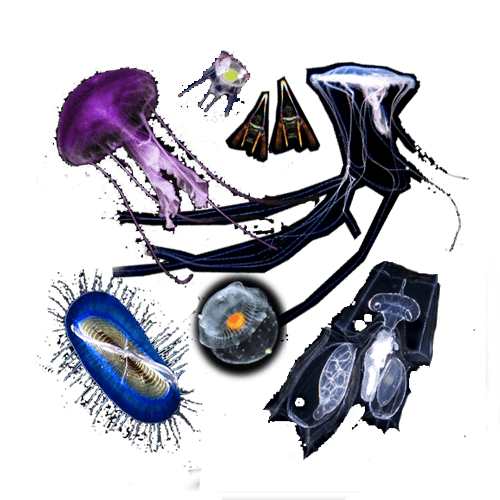
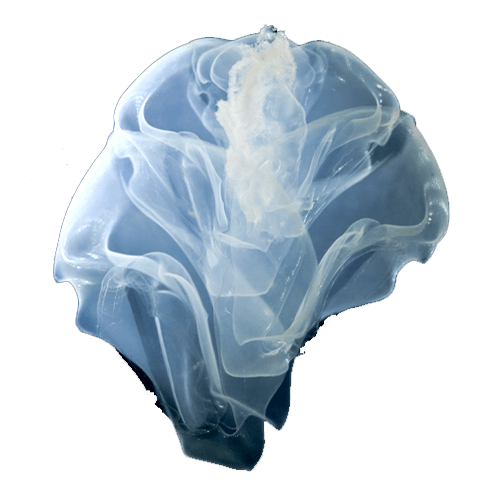
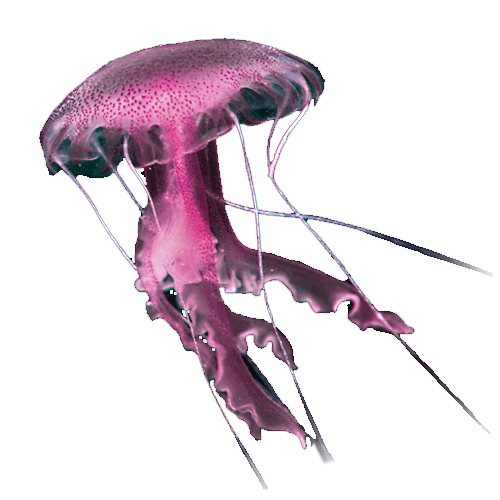
Pelagia are purple-colored jellies about 10cm in diameter that glow at night in the waves. Their name comes from the Greek pelagos, for open sea; nocti, for night; and luca, for light.
Pelagia jellies like to move in great numbers, periodically invading beaches and scaring swimmers. Contact with their long tentacles triggers stinging cells with spiny filaments wound up like springs. These filaments inject toxins into the skin, causing irritation and nasty burns.
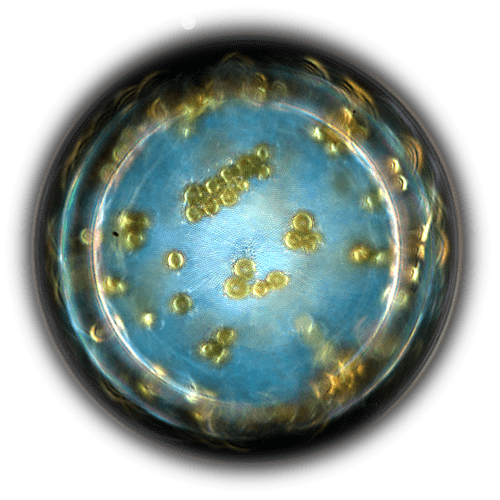
Crustaceans and fish larvae approach pelagia at their peril. Small prey are brought toward the mouth and ingested. Barely a week old, baby pelagia called "ephirules" can feed voraciously on small shrimp.
Male and female pelagia release sperm and eggs in abundance. After fertilization in the open sea, eggs quickly divide into rocket-shaped planula larvae covered with cilia. Each planula grows into a hat-shaped baby jellyfish with a budding mouth and eight lobes.
Tentacles and sensory organs progressively appear and four large arms develop around the mouth. A new purple stinger has emerged.
In this episode
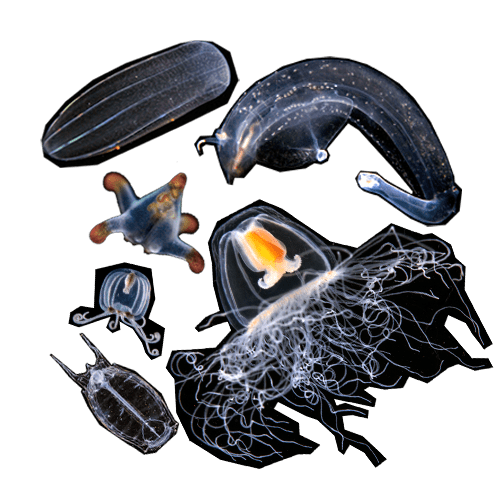
Cnidarians
Pelagia / Pelagia noctiluca
Anthozoan larva
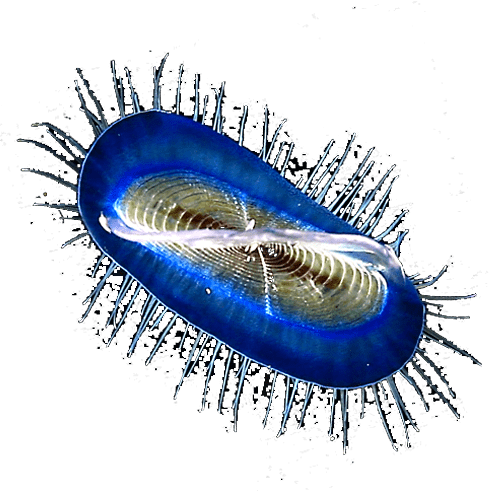
Velella larva / Velella velella
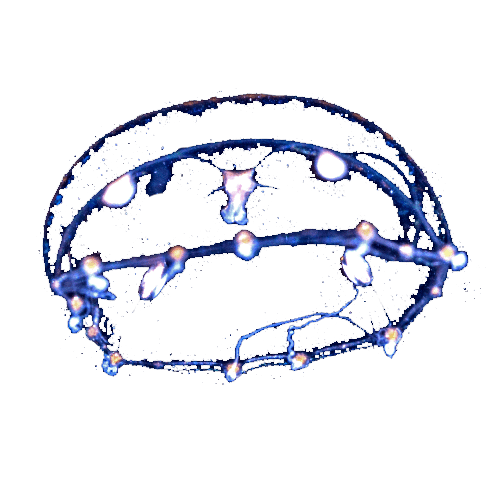
Clytia / Clytia hemispherica
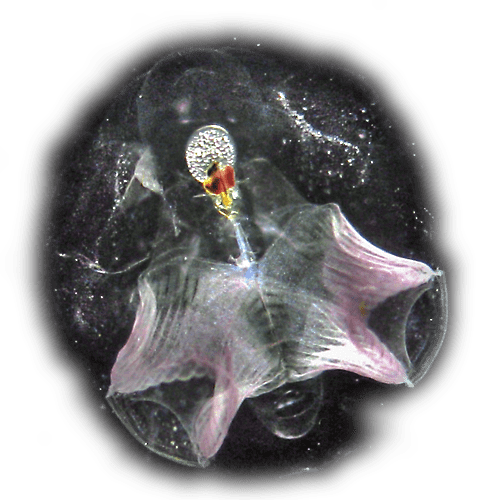
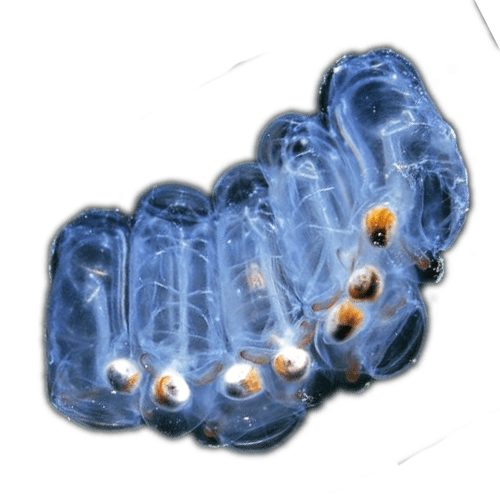
Siphonophore
RELATED VIDEOS
NEW! Siphonophores
The longest animals on the planet
NEW! Clytia
A Laboratory Favorite


VIDEO
PHOTOS