Creative Commons Licence :
Attribution Non-Commercial
No Derivative
Production CNRS
Original Idea
Christian Sardet
Director
Sharif Mirshak
Texts
Christian Sardet, Sasha Bollet
Images
Christian Sardet, Sharif Mirshak, Noé Sardet
Editing
Sharif Mirshak
Sound mix
Sharif Mirshak
Narration
Natasha Noel
Sound engineer
Cristobal Uribina
Velella - Planktonic Vessels
02:36
Colonies of polyps transported by prevailing winds, velella drift at the surface of warm seas.
Narration
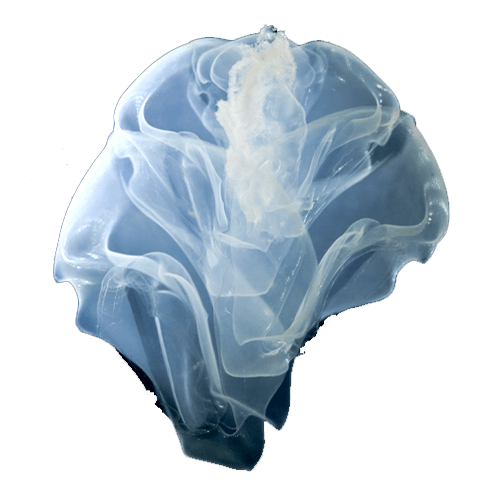
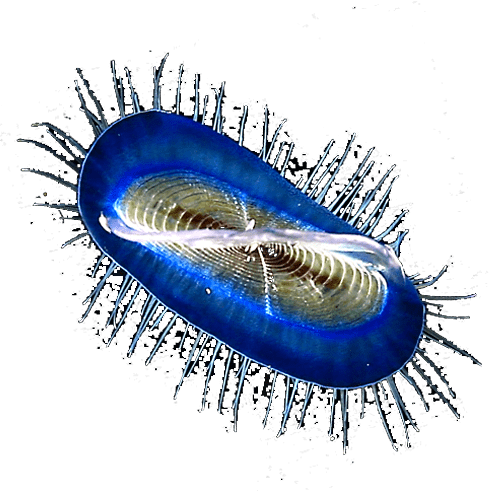
Velella jellies look like toys, 3 cm long with a triangular crest. Underneath their floats, masses of polyps and tentacles help ballast these tiny sailboats.
Velella are close cousins of jellyfish, feeding on fish eggs, larvae or small shellfish. They hunt using stinging tentacles and that pull their prey into the central cavity.
But is this just one animal? Velella are in fact colonies of polyps located under the vessel. A central nourishing polyp, blue tentacles, and reproductive polyps, all working together.
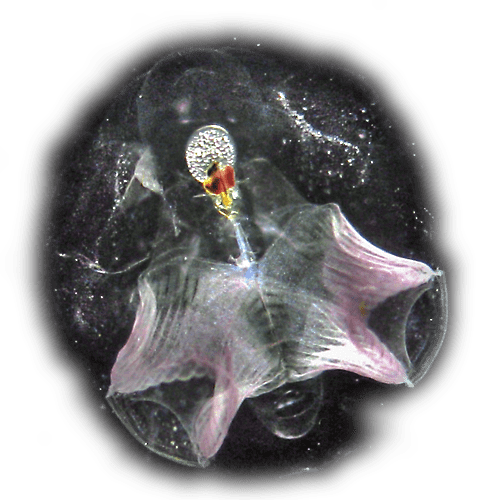
The reproductive polyps hatch microscopic jellyfish, both male and female, ensuring future procreation. One or two weeks later, larvae will rise to the surface and grow into adult planktonic vessels.
Their sails are positioned to the left or right. Depending on wind direction, velella will be dispersed one way or another. These floating vessels can be seen coasting on the surface of warm waters in very large numbers. Carried by the wind, they often wash up on shore, forming blue fringes several miles long.
In this episode
Cnidarians
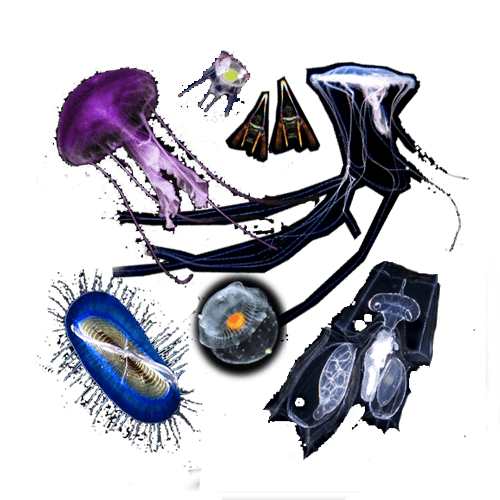
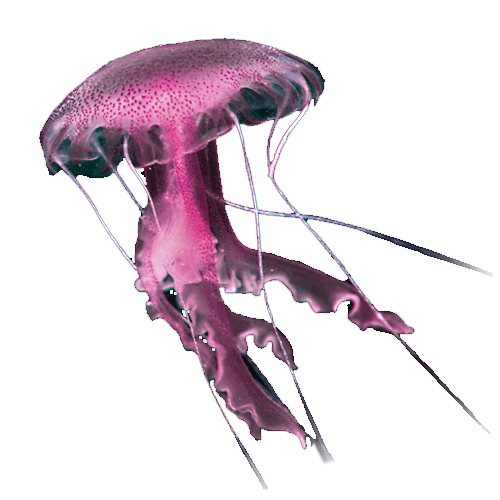
Pelagia / Pelagia noctiluca
Anthozoan larva
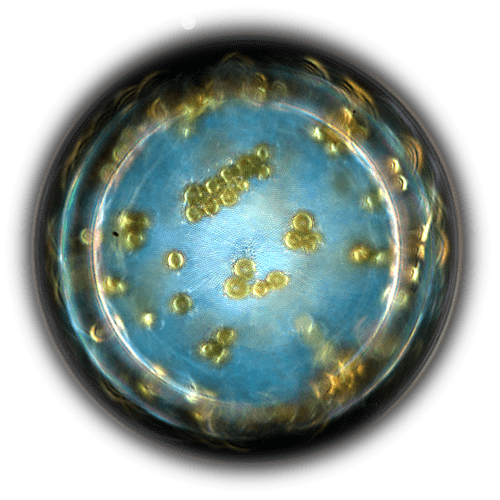
Velella larva / Velella velella
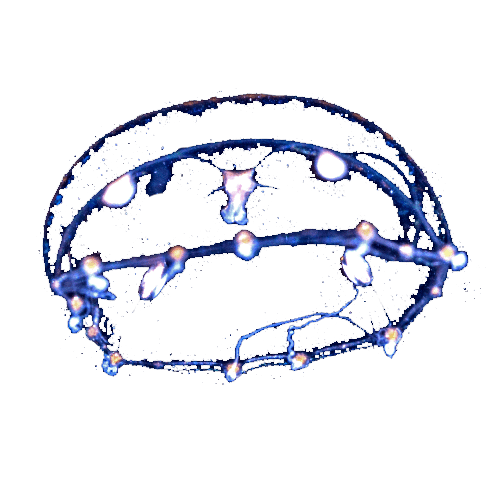
Clytia / Clytia hemispherica
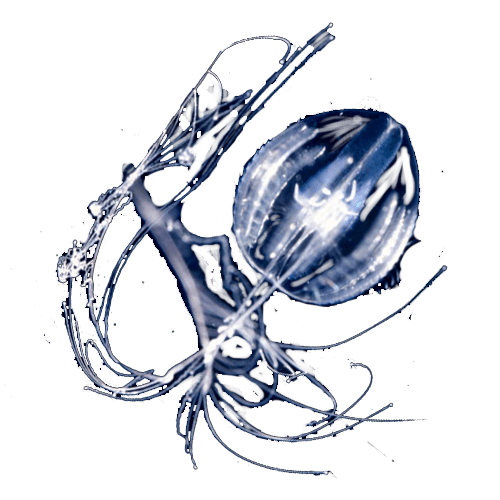
Siphonophore
RELATED VIDEOS
NEW! Siphonophores
The longest animals on the planet
NEW! Clytia
A Laboratory Favorite


VIDEO
PHOTOS